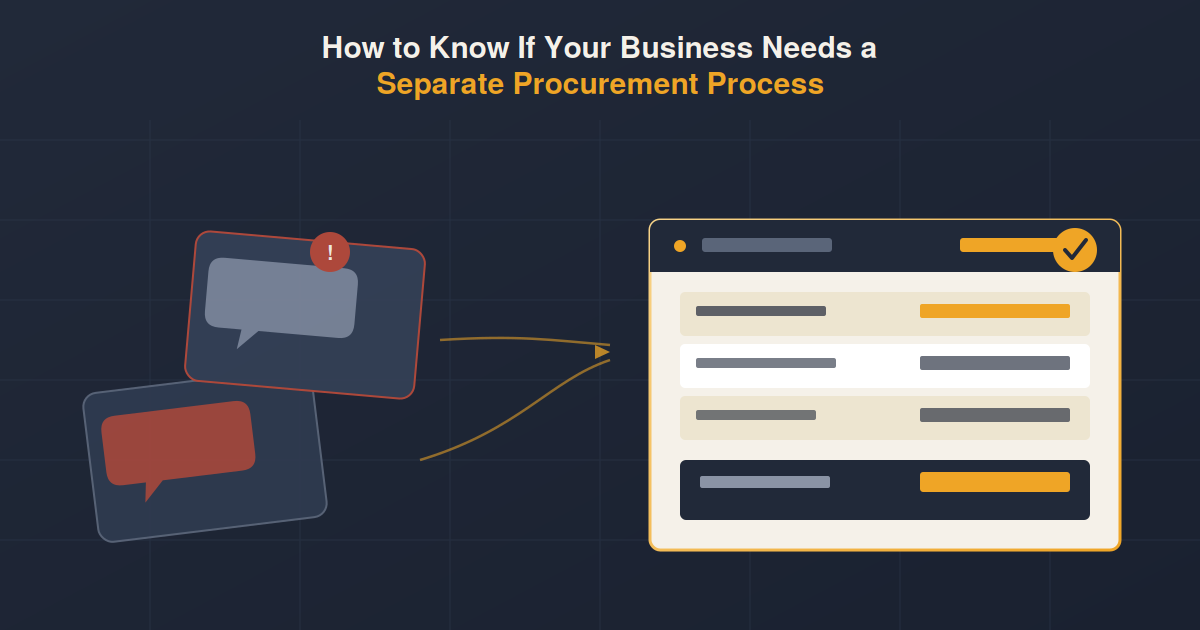
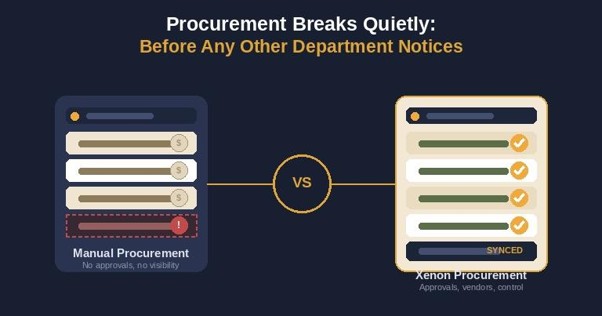
Finance sees a budget overrun. Warehouse sees a duplicate delivery. Nobody sees the purchase order that caused both, because it lived in an email thread, a WhatsApp message, and a verbal approval from someone who’s now on leave.
Procurement is one of the quietest places for money to leak out of a business, precisely because the damage shows up somewhere else first. This post breaks down where manual procurement actually fails, and what a structured procurement module fixes.
Where Manual Procurement Actually Breaks
1. Maverick Spend
Someone outside the purchasing process places an order directly with a vendor because it was faster than waiting for sign-off. Multiply that across a company with a dozen department heads, and pricing consistency disappears, the same item gets bought at three different rates from three different people.
2. No Real Approval Trail
“Verbal approval” and “I told him to go ahead” are not audit trails. When a purchase gets questioned later, during a financial review, an audit, or a compliance check, there’s nothing to point to.
3. Vendor Management by Memory
Which vendor gave the best price last quarter? Who missed a delivery deadline twice? Without a system tracking vendor performance and pricing history, that knowledge lives in one person’s head, and leaves the company when they do.
4. Purchase Orders Disconnected From Inventory
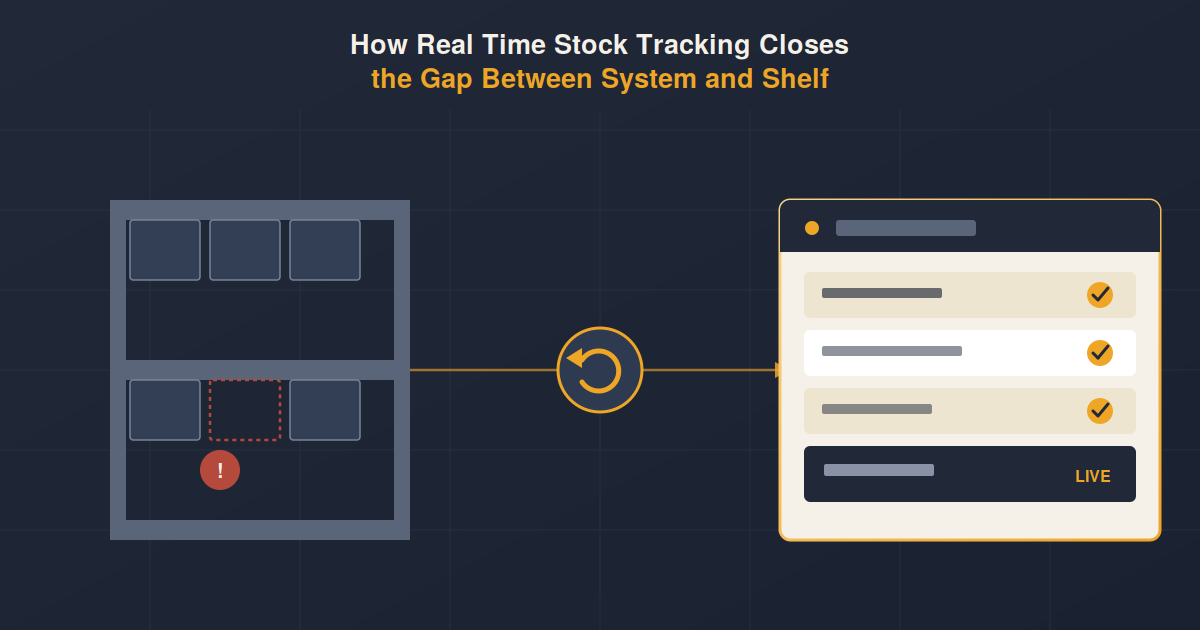
A PO gets raised for stock that’s already sitting in the warehouse, because purchasing and inventory don’t talk to each other in real time. This is the same disconnect we cover in how real-time stock tracking closes the gap between system and shelf, procurement decisions made on stale inventory data are procurement decisions made blind.
5. Duplicate and Delayed Payments
Without a three-way match between purchase order, goods received, and vendor invoice, duplicate payments and late payments both happen, one costs cash directly, the other costs vendor relationships and negotiating leverage.
What a Structured Procurement Module Actually Changes
Controlled Purchasing With Built-In Approvals
Every purchase request routes through a defined approval chain based on amount, department, or category, no more purchases that only exist because someone was in a hurry.
Centralized Vendor Records
Pricing history, delivery performance, and contract terms live in one place, so negotiating the next order doesn’t start from zero.
Purchase Orders Tied to Live Inventory
A PO is raised against real stock levels, not a memory of what’s on the shelf, directly closing the gap described above.
Three-Way Matching
Purchase order, goods receipt, and vendor invoice are checked against each other automatically before payment goes out, catching discrepancies before they become disputes or duplicate payments.
Full Cost Transparency
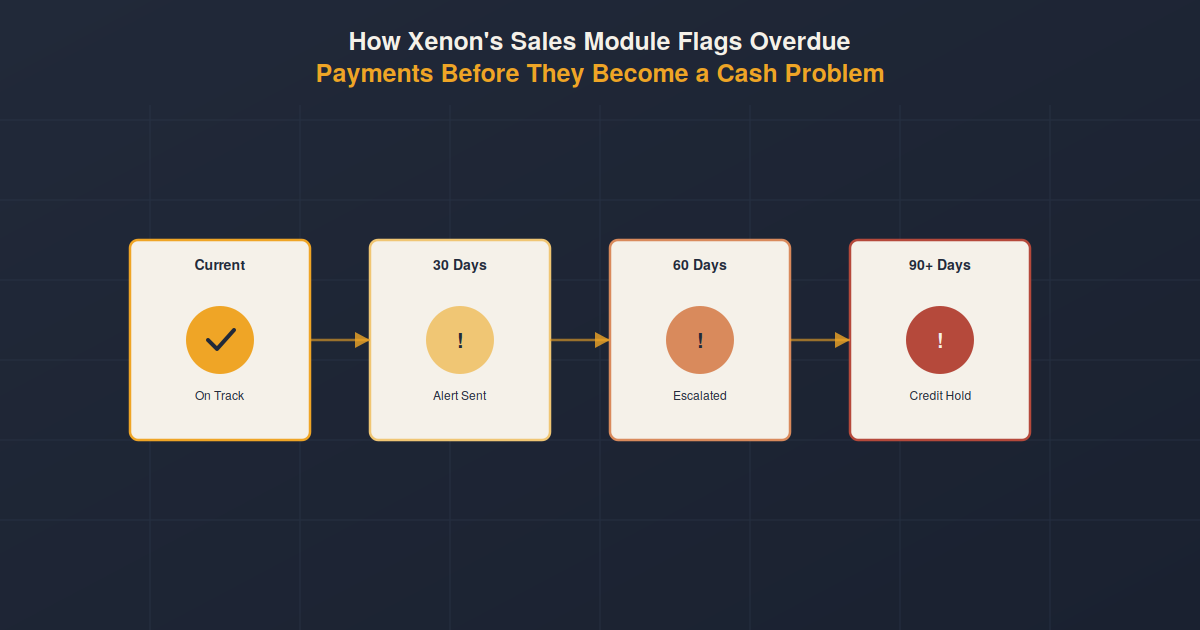
Every purchase rolls up into department and project budgets in real time, instead of showing up as a surprise at month-end, the same visibility gap addressed in how Xenon’s sales module flags overdue payments before they become a cash problem, just on the spend side instead of the revenue side.
Why This Matters More As a Business Grows
A five-person team can manage procurement over WhatsApp and get away with it. A business running multiple departments, projects, or warehouse locations can’t, the coordination cost of manual purchasing grows faster than the business does. This is one of the recurring patterns behind what a bad ERP implementation usually looks like: procurement is often the module companies delay digitizing longest, right up until a vendor dispute or budget overrun forces the issue.
Industry research from the Chartered Institute of Procurement & Supply consistently points to maverick spend and lack of approval controls as leading causes of procurement cost leakage, issues that are structural, not a matter of staff diligence.
Bottom Line
Procurement problems rarely announce themselves as procurement problems. They show up as a finance discrepancy, a warehouse overstock, or a vendor who quietly stops offering their best pricing. A controlled, connected procurement process, tied to inventory and finance rather than sitting in isolation, closes that gap before it costs real money.
FAQs
1. What is procurement management software?
Procurement management software centralizes purchase requests, approvals, vendor records, and purchase orders into one system, replacing manual processes like email chains and verbal sign-offs with a controlled, auditable workflow.
2. How does procurement software prevent maverick spend?
By requiring every purchase to route through a defined approval chain and centralized vendor list, it removes the ability for purchases to happen outside the agreed process, closing the gap that lets off-contract or inconsistent pricing occur.
3. What is three-way matching in procurement?
Three-way matching checks the purchase order, the goods receipt, and the vendor invoice against each other before payment is released, catching mismatches, duplicate charges, or discrepancies before money leaves the business.
4. Does procurement software integrate with inventory and finance?
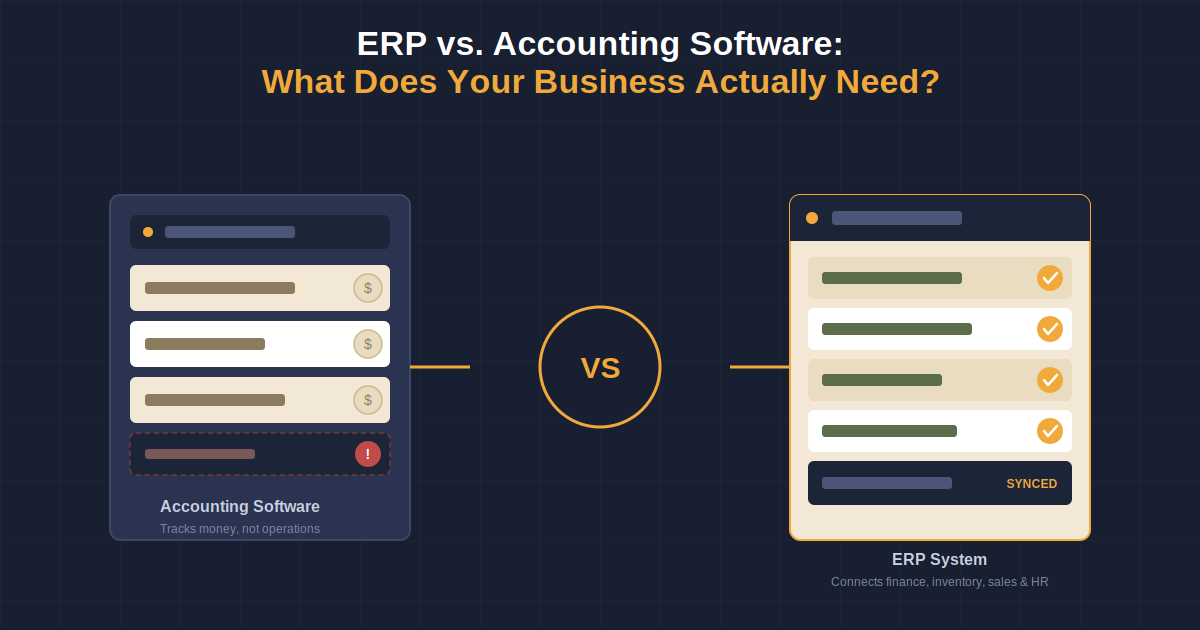
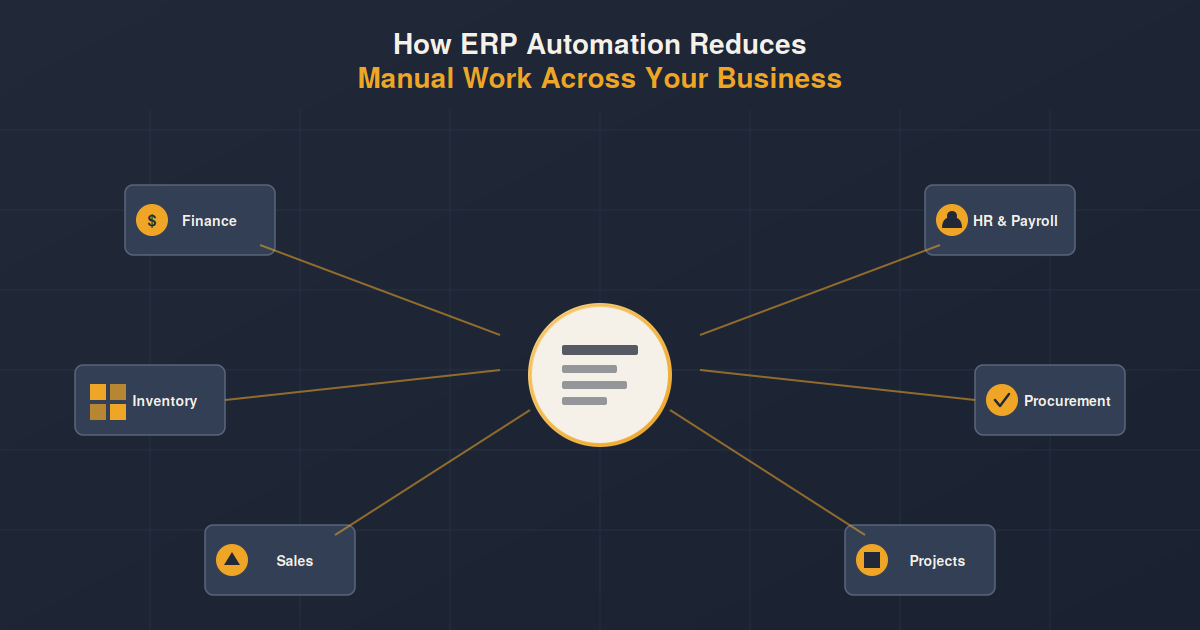
In an integrated ERP like Xenon, yes, purchase orders are raised against live inventory levels and automatically flow into finance for budget tracking, rather than existing as a disconnected, standalone process.
5. Is a dedicated procurement module necessary for a small business?
It depends on transaction volume and vendor count, a very small operation may manage manually for a time, but as departments, projects, or purchasing volume grow, the coordination cost of manual procurement typically outweighs the effort of setting up a structured process.
See Procurement Done Right
Xenon ERP’s Procurement module gives you approval workflows, vendor management, and purchase orders tied directly to real inventory and finance data, no more chasing down what was actually approved.
Request a Demo or explore the Procurement module in detail.