
For growth-focused enterprises, financial data is the ultimate compass. Yet, a surprising number of finance departments operate in a perpetual state of triage. The first half of every month is typically consumed by tedious manual reconciliations, a stressful rush to track down missing vendor invoices, match bank statements by hand, and fix spreadsheet errors across different departments.
By the time the executive team receives the previous month’s financial statements, the data is already weeks old. Management is effectively steering a high-speed vehicle by looking exclusively through the rearview mirror. Worse still, the mere notification of an upcoming regulatory or financial audit triggers widespread organizational anxiety.
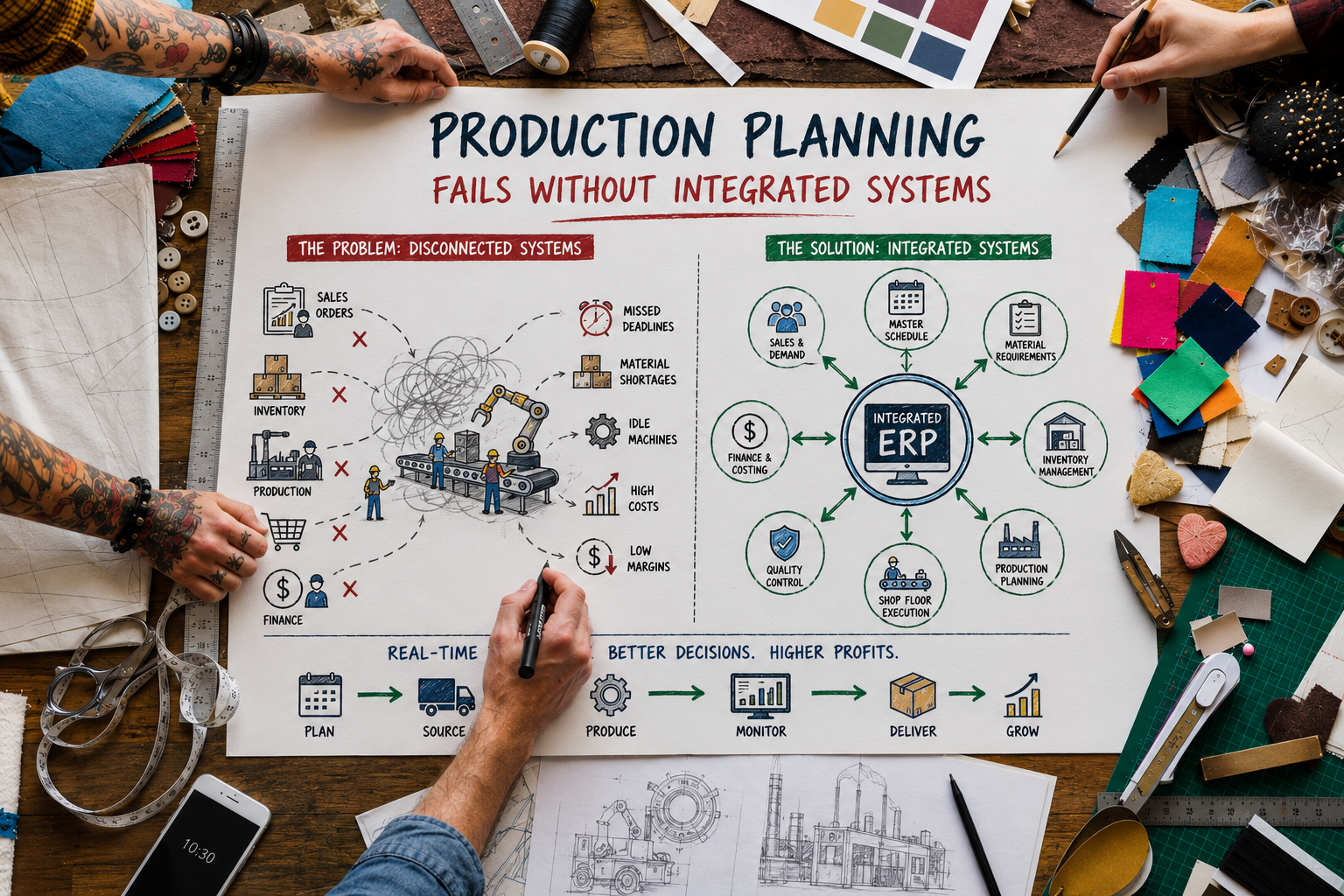
It is time to break this cycle. True financial agility requires a shift from retroactive bookkeeping to real-time financial engineering. An integrated Enterprise Resource Planning (ERP) platform achieves this transformation by fundamentally restructuring how data moves through an organization.
Here is a breakdown of how a unified enterprise system, like XENON ERP, simultaneously builds a state of continuous audit-readiness and unlocks absolute cash flow visibility.
Part 1: The Anatomy of Continuous “Audit-Readiness”
In traditional corporate accounting, being “audit-ready” is treated as an event, a frantic sprint of preparation that happens once or twice a year. In a modern enterprise, audit readiness should be a permanent state of existence.
To an auditor, a healthy financial ecosystem satisfies four fundamental pillars: Completeness (no missing data), Accuracy (no computational flaws), Validity (transactions are authentic and authorized), and Traceability (every ledger line is supported by an unbroken chain of operational evidence).
An ERP platform guarantees these pillars by structurally preventing the issues that typically trigger audit red flags.
1. Eliminating the Reconciliation Gap via the Single Ledger
When an organization relies on disparate software solutions, data fragmentation is inevitable. The sales pipeline lives in an isolated CRM; procurement operates out of a standalone logistics tool; manufacturing relies on specialized warehouse software; and the accounting team works inside an isolated ledger application.
At the end of every fiscal period, these systems must be forced to talk to one another. Data is exported to CSV files, manipulated via Excel macros, and manually keyed into the general ledger. This “reconciliation gap” is exactly where errors breed, and it is the first place auditors look for anomalies.
An integrated platform like XENON ERP eliminates this gap by unifying all operational events into a single database architecture. When a warehouse manager logs a received shipment of raw materials, the system automatically drafts the corresponding inventory asset increase and accounts payable liability. When a field agent closes a service contract, the revenue recognition logic immediately schedules the appropriate deferred or earned revenue entries.
Because every module feeds a single, centralized general ledger in real time, there are no separate databases to reconcile. Operational reality and financial records become indistinguishable.
2. Standardizing Control via Automated Three-Way Matching
Human intervention is the single largest point of failure in corporate internal controls. Manual invoice approval processes are inherently susceptible to processing oversights, duplicate payments, and unauthorized spending.
An ERP safeguards systemic integrity by digitizing and enforcing strict business logic. A prime example is automated Three-Way Matching, an indispensable internal control mechanism required by rigorous accounting standards like the Financial Accounting Standards Board (FASB).
When a vendor invoice is ingested into the system, often automated via optical character recognition (OCR)—the ERP automatically executes a cross-referenced validation against two other historical documents. First, it checks the Purchase Order to verify that the items, pricing, and terms were officially budgeted and authorized by procurement. Second, it checks the Goods Receipt Note to verify that the logistics or warehouse team actually received, inspected, and accepted those exact quantities.
If the quantities, item IDs, and monetary values align across all three documents within pre-configured tolerance levels, the invoice is automatically scheduled for payment. If a discrepancy exists, such as an overcharge or a short-shipment, the system immediately freezes the transaction and routes it to an exception queue. This prevents capital leakage and ensures that every dollar leaving the enterprise is backed by authenticated business value.
3. Immutable, Time-Stamped Digital Audit Trails
For an external auditor, a standalone financial figure on a balance sheet is meaningless without its contextual lineage. Auditors spend a significant portion of their billable hours mapping the journey of a transaction from its inception to its final ledger home, testing for internal tampering and unauthorized adjustments.
A modern enterprise system converts this arduous investigative process into a simple exercise through automated transparency. Every single keystroke, configuration shift, master data edit, and journal adjustment within the platform generates a permanent, unalterable digital footprint.
If a senior accountant adjusts an accounts receivable entry late at night, the system records the user ID, the IP address, the exact timestamp, the original value, the updated value, and mandates the attachment of supporting digital documentation. This level of granular transparency completely demystifies the audit process. Rather than spending weeks pulling paper invoices out of physical filing cabinets, finance teams can grant auditors read-only access to the system, enabling them to self-serve and trace any transaction path in seconds.
4. Native Compliance with Global Accounting Frameworks
Navigating the nuanced differences between Generally Accepted Accounting Principles (GAAP) and International Financial Reporting Standards (IFRS) can be an operational minefield, particularly for companies managing multi-entity structures, cross-border trade, or diverse currency portfolios.
Enterprise financial engines are engineered with these compliance parameters hardcoded into their core business logic:
For complex revenue recognition under standards like ASC 606 and IFRS 15, the platform automatically deconstructs multi-element bundles, subscriptions, or milestone billing contracts. It calculates distinct performance obligations and recognizes revenue systematically over time, removing subjective human guesswork.
For fixed asset management, the platform automatically calculates and applies multi-jurisdictional depreciation schedules, such as straight-line, double-declining balance, or MACRS for tax purposes, across the entire equipment lifecycle to keep asset values pristine.
For intercompany eliminations in corporate structures containing parent companies and subsidiaries, the platform automates the neutralization of internal cross-charges during consolidation, ensuring that consolidated financial statements strictly reflect external economic realities.
Part 2: Mastering Real-Time Cash Flow Dynamics
While structural audit-readiness provides an ironclad defense of past business performance, real-time cash flow management represents an organization’s core offensive strategy.
Profitability on paper does not equate to liquidity in the bank. Countless theoretically profitable corporations have slid into insolvency because their working capital was locked up in illiquid inventory or stagnant receivables while their immediate short-term liabilities came due.
Managing liquidity via static spreadsheets updated at the end of the month is an obsolete approach. True financial control requires a dynamic, real-time view of capital velocity across all inflows and outflows.
1. Accelerating Inflows: The Accounts Receivable Velocity Engine
The speed of your cash inflows is directly proportional to the efficiency of your billing workflows. In a decentralized environment, a service is rendered or a product is delivered, but weeks pass before the billing department is formally notified to generate an invoice. This friction balloons your Days Sales Outstanding (DSO) and chokes operational liquidity.
By unifying customer delivery and finance, an ERP builds a high-velocity billing ecosystem through instantaneous billing triggers. The moment a shipping manifest is marked delivered via a logistics module, or a project manager checks off a milestone on an integrated timeline, the financial system immediately drafts and transmits a mathematically precise invoice to the client.
Furthermore, integrating online payment gateways allows clients to settle invoices with a single click. When a payment occurs, the ERP instantly clears the balance, records the bank deposit, and balances the subsidiary ledger without a single moment of manual accounting effort. Automated workflows handle remaining collection steps by categorizing outstanding accounts and executing multi-tier, personalized reminders based on precise client credit profiles.
2. Optimizing Outflows: Accounts Payable and Strategic Spend Control
Maximizing your cash position is not merely about pulling capital in as fast as possible; it is equally about orchestrating outgoing capital with surgical precision. Without deep visibility into upcoming procurement cycles and contract renewals, companies often pay invoices haphazardly, either depleting their cash reserves prematurely or missing out on lucrative cost-saving opportunities.
An integrated platform shifts accounts payable to a tactical liquidity lever through strategic payables scheduling. Financial managers gain immediate visibility into a comprehensive matrix of all upcoming vendor liabilities, categorized by due dates, grace periods, and early-payment discount windows. This allows finance to systematically time disbursements, preserving maximum cash-on-hand during tight operating windows while capitalizing on vendor discounts when liquidity is abundant.
It also introduces granular upstream spend control to stop unauthorized spending before it occurs. Through advanced purchasing integration, employees cannot bypass budget limits. If a department head attempts to procure new software or equipment that exceeds their quarterly budget allocation, the platform locks the requisition order at the point of origin, routing it up the chain of command for executive approval before a commitment is made to an external vendor.
3. Transitioning from Reactive Tracking to Predictive Cash Forecasting
Looking at a banking dashboard tells you exactly what your cash position is at this very second. While useful, it offers zero insight into what your cash position will look like forty-five days from now. True corporate resilience demands predictive foresight.
Because an enterprise system serves as the central neural network of the business, it possesses access to forward-looking operational indicators that never appear in a standard accounting ledger.
From the CRM and sales pipeline, it pulls expected closing dates, contract weights, and probability matrices of upcoming bookings.
From procurement and the supply chain, it checks open purchase requisitions, pending manufacturing raw-material orders, and inbound freight commitments.
From project management, it assesses contractual milestone horizons, retainer drawdown schedules, and resource utilization costs.
Finally, from human resources, it monitors scheduled salary adjustments, seasonal hiring costs, and benefit allocation modifications.
The ERP automatically synthesizes these non-financial, operational variables alongside historical payment behaviors and fixed overhead obligations to construct real-time, predictive cash velocity curves. Finance executives can manipulate variables within dynamic forecasting models to stress-test corporate strategy, ensuring they know exactly how a slowdown in collection cycles or sudden market shifts will impact their ability to fund upcoming expansion plans.
Part 3: The Macroeconomic Impact of Financial Transformation
When an enterprise successfully bridges the gap between operational workflows and real-time financial reporting, the operational benefits ripple across the entire organization.
The Velocity of Decision-Making
In a legacy environment, strategic decisions are often delayed because the executive team is waiting on the previous month’s financial wrap-up. In a volatile market, a delay of two weeks can mean missing a prime market opportunity or failing to course-correct a failing product line. Real-time visibility grants leadership the confidence to move decisively, backed by a clear picture of their financial health.
Radical Reduction in Overhead Costs
Manually processing invoices, chasing paper trails, and correcting data entry errors is incredibly labor-intensive. By automating repetitive accounting tasks, companies can scale their transaction volumes significantly without needing to linearly expand their back-office headcount. Your financial experts can step away from basic administrative work and focus on high-impact strategic priorities like capital allocation, tax optimization, and business development.
Maximizing Corporate Valuation and Capital Accessibility
Whether your organization is seeking to secure a debt facility from a Tier-1 banking institution, preparing for an investment round, or positioning itself for an eventual public offering, financial transparency is paramount.
Potential investors and lenders conduct rigorous due diligence. An organization that can instantaneously deliver pristine, fully audited financial statements alongside highly accurate, data-driven cash flow projections commands a premium valuation. It signals to the market that the business is run with precision, reducing perceived risk and lowering the cost of capital.
Drive Institutional Excellence with XENON
The days of viewing corporate finance as an administrative tracking exercise are gone. In today’s interconnected business landscape, financial transparency, process automation, and real-time data accessibility are foundational elements of operational success. Relying on disconnected systems and manual spreadsheets is a vulnerability that limits growth, exposes the business to compliance risks, and leaves leadership blind to sudden shifts in liquidity.
XENON ERP provides a sophisticated, modern enterprise infrastructure built specifically to solve these challenges. By unifying accounting, procurement, sales, inventory, and human capital into a single source of truth, XENON automates complex compliance workflows, enforces robust internal controls, and delivers clear visibility into your past, present, and future financial performance.
Ready to Unify Your Corporate Financial Operations?
Don’t let manual processes anchor your growth. Empower your executive team and finance professionals with the tools required for continuous audit-readiness and proactive capital management.
Request a Personalized XENON Demo Today and discover how integrated enterprise automation can elevate your business operations.