A profit and loss statement can say the month went well. The bank balance can tell a completely different story, at the same time, about the same business.
A business can close a genuinely strong sales month, hit its revenue target, book the invoices, and still struggle to make payroll three weeks later. This confuses a lot of business owners the first time it happens, because it feels like a contradiction. The sales report says one thing. The bank account says another. Both are technically correct.
The reason is simple once it is named, revenue is recorded the moment a sale happens. Cash arrives whenever the customer actually pays, which is rarely the same day, and is sometimes not for weeks or months. Between those two moments sits a gap, accounts receivable, and how well that gap is managed determines whether a profitable business also has the cash to operate like one.
This is a closer look at why that gap exists, why it is so easy to lose track of, and what actually keeps it from becoming a real cash flow problem.
Revenue Recognition vs Cash Collection: Two Different Events
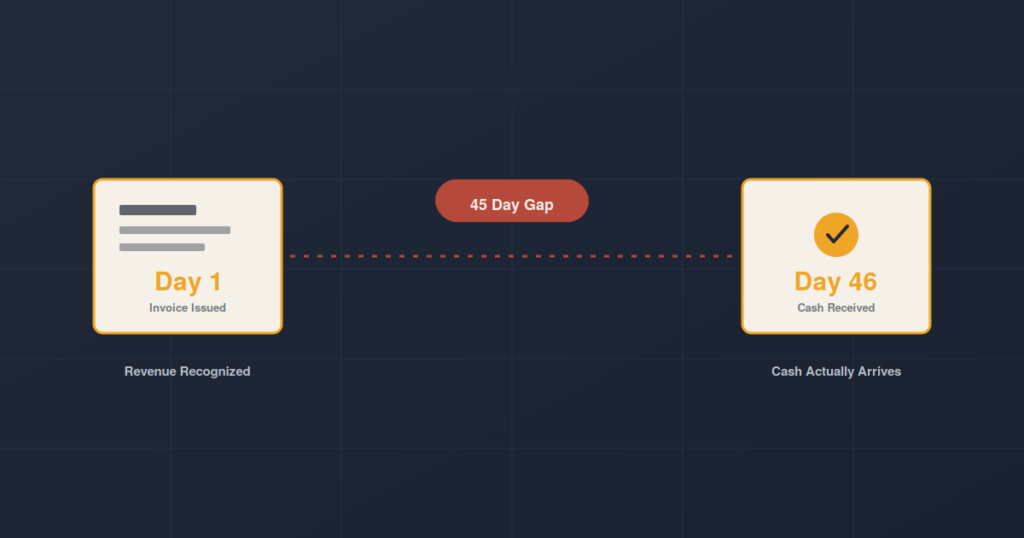
Revenue is recorded when a sale is made, an invoice is issued, the transaction is recognized in the books, regardless of when payment actually arrives. Cash collection happens separately, whenever the customer transfers the money. For a cash sale, these two events happen at the same moment. For a credit sale, which is how most business to business transactions actually work, they can be separated by 30, 60, or 90 days, sometimes longer.
This is not a flaw in accounting, it reflects economic reality accurately. The problem is that a business owner glancing only at the revenue number can walk away with a completely different sense of financial health than the one the bank account actually reflects.
Why This Gap Is Easy to Lose Track Of
A single unpaid invoice is easy to keep in mind. Fifty unpaid invoices, across dozens of customers, each with different payment terms and different actual payment behavior, is not something anyone tracks reliably by memory or a loosely maintained spreadsheet. Sales teams are usually focused on closing the next deal, not chasing the last one, and finance teams often only notice a collection problem once cash is already tight, not while there was still time to act on it early.
A quick way to test this. Pull your total revenue for last month, then pull the total cash actually received from customers in that same period. If the two numbers are meaningfully far apart and nobody could tell you why without digging, that is the gap this article is about.
What Accounts Receivable Aging Actually Shows You
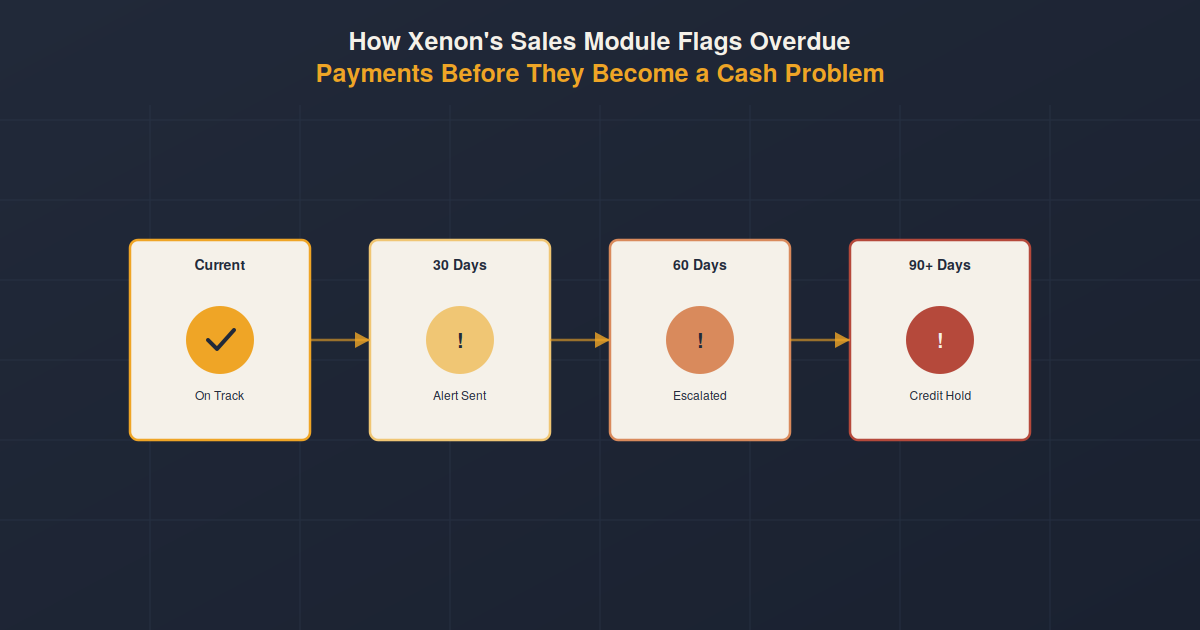
Accounts receivable aging is a report that groups everything customers owe by how overdue it is, current, 30 days past due, 60 days, 90 days and beyond. This is one of the most underused reports in small business finance, largely because it requires the underlying invoice and payment data to be clean and current, which manual systems rarely manage consistently.
What aging reveals is not just how much money is outstanding, but where it is getting stuck. A customer who is reliably 15 days late every time is a very different risk than one sliding further past due every cycle. Without an aging report, both look identical, just an unpaid invoice.
Why Some Customers Are Quietly More Expensive Than Others
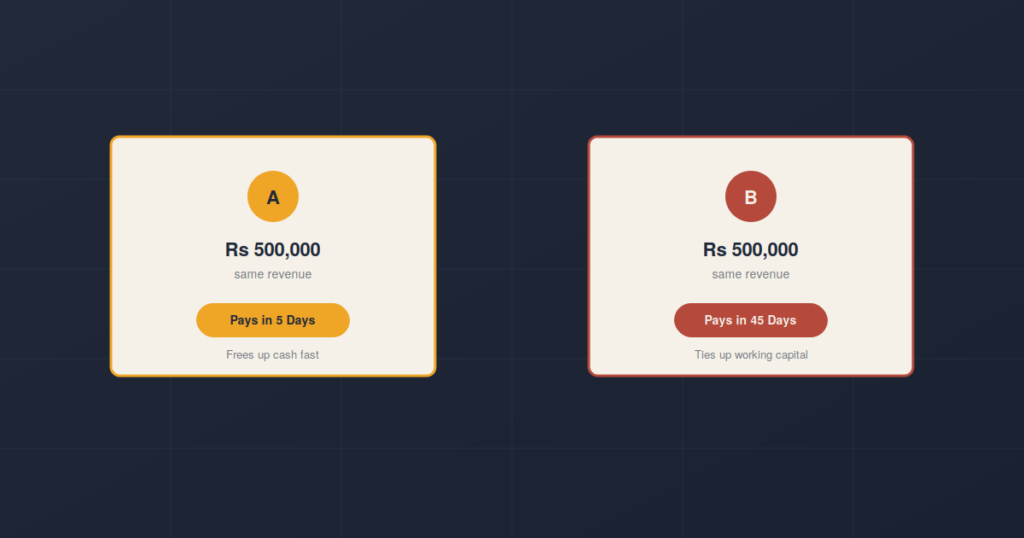
Two customers can generate the exact same revenue and cost a business very different amounts in practice. One pays on time, every time. The other consistently pays 45 days late, ties up working capital, and requires repeated follow-up to collect. The second customer is not actually as profitable as the revenue number suggests, once the cost of that delay, the financing gap it creates, is accounted for.
Most businesses do not track this distinction explicitly. It shows up only as a vague sense that certain customers are more trouble than others, without ever being quantified.
Credit Limits: A Policy, Not a Suggestion
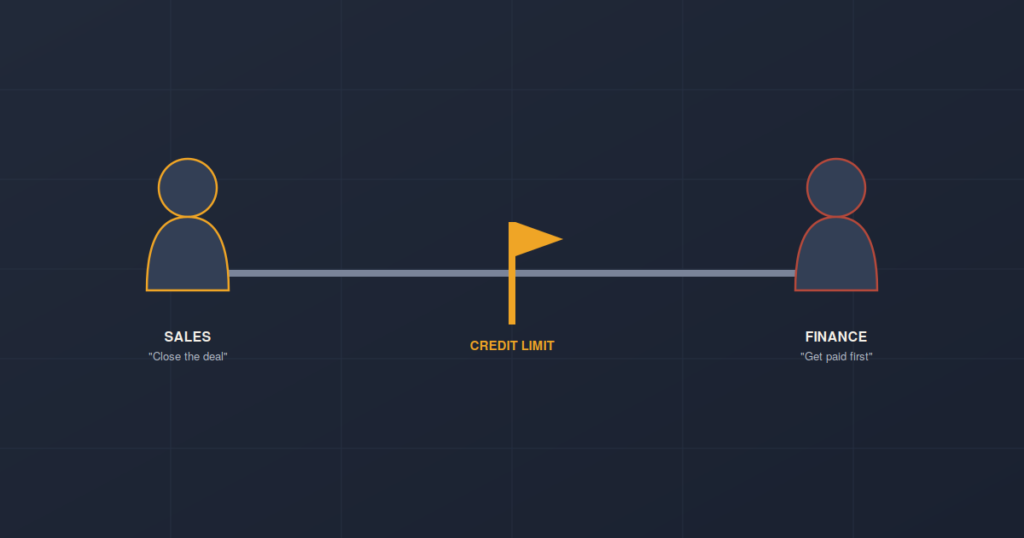
A credit limit exists to cap how much risk a business is willing to carry on any single customer at once, the maximum combined value of unpaid invoices and unbilled orders the business is comfortable being owed. In practice, credit limits are often treated as a soft guideline rather than an actual control, a sales team eager to close one more order will frequently ask for an exception, and if there is no system enforcing the limit, the exception becomes routine.
This is where sales incentives and financial risk genuinely pull in different directions. A sales rep is measured on closing the deal. Finance is measured on getting paid. Without a system that enforces the credit limit automatically, that tension gets resolved in favor of whoever pushes harder in the moment, not necessarily what is actually good for the business.
Customer Advances and Deposits: The Other Direction
The gap between revenue and cash does not only run one way. Customer advances and deposits, cash received before the sale is fully recognized as revenue, create the opposite kind of timing difference. Businesses that collect deposits or advance payments need this tracked clearly too, since it represents cash in hand that is not yet fully earned, and mismanaging that distinction creates its own kind of confusion in financial reporting.
What Happens Without Aging Reports and Enforced Credit Limits
Without visibility into receivables aging, a business tends to discover a collection problem only when it becomes a cash flow problem, when a payment that should have arrived did not, and something else, payroll, a vendor payment, a tax deadline, is suddenly at risk. Without enforced credit limits, exposure to any single customer can grow quietly past what the business would have knowingly accepted, until a delayed or defaulted payment causes real damage.
Both of these are preventable, but only if the numbers are visible early enough to act on, not after the fact.
Xenon ERP’s Sales module tracks customer balances, aging, and payment status continuously, so businesses can see exactly where cash is getting stuck before it becomes a payroll conversation.
Revenue Visibility vs Cash Visibility
| Area | Manual / Spreadsheet Tracking | Xenon Sales Module |
|---|---|---|
| Customer balances | Reviewed periodically, often outdated | Checked in real time against every invoice |
| Overdue payments | Noticed when someone happens to check | Timely alerts when payments are overdue |
| Aging analysis | Built manually, rarely kept current | Customer aging tracked continuously |
| Credit limits | A guideline, easy to override informally | Enforced against real time customer balances |
| Customer statements | Compiled manually on request | Generated directly from the system |
Not sure how much of your revenue is actually sitting uncollected right now?
Xenon’s team can walk through your current receivables and show you where the gap is forming.
Get a Free Receivables Review
What Xenon’s Sales Module Actually Covers
Xenon ERP’s Sales module keeps customer records, invoices, and balances in one connected system, so the gap between revenue and collected cash stays visible instead of hidden until month end.
Customer Balance Tracking
Check remaining balances in real time against every invoice issued.
Overdue Payment Alerts
Timely alerts when a customer payment is overdue, before it becomes a bigger gap.
Aging Analysis
See exactly how overdue each customer’s balance is, at any time.
Sales Orders & Fulfillment
Manage orders, shipment, and invoicing from one connected workflow.
Customer Advances
Track deposits and advance payments separately from recognized revenue.
Customer Statements
Generate clear statements directly from the system for easy reconciliation.
See the full breakdown on the
Sales Management module page.
Frequently Asked Questions
Why can a business be profitable on paper but still short on cash?
Because revenue is recorded when a sale happens, while cash arrives only once the customer actually pays. If a large share of revenue sits in unpaid invoices, the business can look profitable while genuinely lacking the cash to operate.
What is accounts receivable aging, in simple terms?
It is a report that groups everything customers owe by how overdue it is, current, 30 days, 60 days, and beyond, making it easy to see where collection is actually breaking down.
Should every customer have the same credit limit?
No. Credit limits should reflect each customer’s payment history and risk profile, and should be enforced consistently rather than treated as a flexible guideline.
What is the difference between a customer advance and revenue?
An advance is cash received before a sale is fully earned or delivered. It should be tracked separately from recognized revenue until the sale is actually completed.
Can Xenon automatically alert us when a customer payment is overdue?
Yes. The Sales module provides timely alerts when payments are overdue, so collection issues are visible as they happen rather than discovered later.
Final Thoughts
Revenue and cash are not the same thing, and treating them as interchangeable is one of the quieter ways growing businesses run into trouble. The fix is not necessarily selling less on credit, credit terms are often a normal and necessary part of doing business. The fix is having real visibility into who owes what, for how long, and enforcing the limits that keep any single customer’s delay from becoming the whole business’s problem.
A strong sales month and a healthy cash position should usually move together. When they consistently do not, that gap is worth investigating directly, not just felt vaguely every time payroll gets a little tighter than it should be.
Related Reading
- Finance & Accounting Module Overview
- How to Know If Your Business Needs a Separate Procurement Process
- Credit Notes, Debit Notes, and the Reconciliation Mess They Cause Without a System
Ready to see exactly where your cash is getting stuck?
Book a free demo and walk through your own receivables with Xenon’s team.
Book a Free Demo