Ask your finance manager for last month’s real profit number. Then ask your operations head the same question. If you get two different figures, and a third one shows up when the owner checks the bank account, you already know what this article is about.
Spreadsheets are not the problem when a business is small. One founder, one ledger, one laptop, Excel works fine. The problem starts the moment a second person touches the file, or a second branch opens, or a bank starts asking for numbers you cannot produce in one sitting. That is the point most Pakistani SMEs quietly cross without noticing, and it is the point where a free tool starts charging a very real price.
This is not a pitch against Excel. It is a breakdown of what spreadsheet based finance actually costs a growing business, in hours, in errors, in compliance exposure, and in decisions made on numbers nobody can fully trust. By the end you will know exactly which signs mean you have outgrown the spreadsheet, and what a business actually needs once that happens.
The Spreadsheet Trap: How Every Growing Business Falls Into It
Nobody decides to run their finances on spreadsheets forever. It happens gradually. One tab becomes twelve. One person maintaining the file becomes three people editing it from different laptops. A formula that worked for fifty rows starts breaking at five thousand. By the time anyone stops to ask whether Excel is still the right tool, the business is already too dependent on it to switch easily.
This is the trap. Spreadsheets scale in complexity much faster than they scale in reliability. A business that started with clean, simple sheets ends up with a web of linked files, manual copy paste routines, and one person who is the only one who understands how the whole thing fits together. When that person goes on leave, the finance function goes with them.
Signs You Have Already Outgrown Excel for Finance
Most business owners do not wake up and decide to move off spreadsheets. They realize it after the fact, usually after something goes wrong. Here are the clearest signals that the switch is overdue.
- Closing the books takes more than a week. If month end used to take two days and now takes eight, that is not a staffing problem, it is a systems problem.
- You have more than one version of the truth. Sales has a number, finance has another, and reconciling them takes a meeting.
- Someone left and took institutional knowledge with them. If your finance sheets only make sense to the person who built them, that is a single point of failure.
- You are managing more than one branch, project, or legal entity. Consolidating separate spreadsheets manually is where most errors are born.
- Your accountant is spending more time fixing formulas than analyzing numbers. That is expensive time going to the wrong task.
The Hidden Cost of Manual Data Entry
Every invoice, payment, and expense that gets typed into a spreadsheet by hand is a chance for a mistake. Not because your staff is careless, but because manual entry has a known error rate no matter how careful the person is. A misplaced decimal, a duplicated row, a formula that did not update when a new line was inserted, these are not rare events in a busy finance team. They are a statistical certainty over enough transactions.
The direct cost is staff time. A finance executive re-entering the same sales data into three different sheets, once for reporting, once for tax, once for the owner, is doing work that should not exist. The indirect cost is worse. Every hour spent on re-entry is an hour not spent reviewing margins, chasing receivables, or planning cash flow. Multiply that across a finance team over a year and the number gets uncomfortable fast.
A quick way to test this. Time how long it takes your team to produce a consolidated profit and loss statement across all branches or projects today. If the honest answer is more than a few hours, manual entry is already costing you more than you think.
Version Control Chaos: Whose Spreadsheet Is the Real One
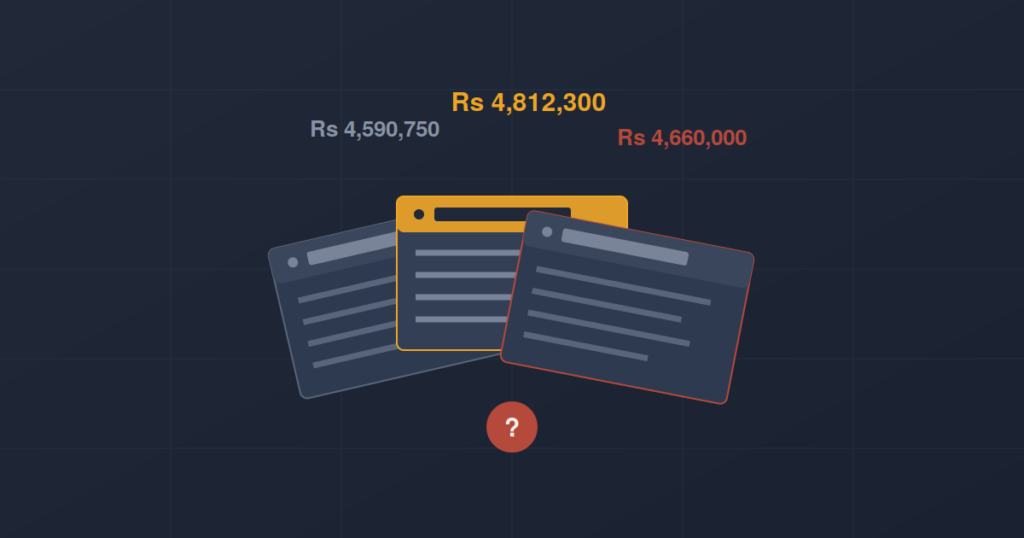
This is the problem every finance manager knows and nobody likes to admit out loud. Somewhere on a shared drive there are files named FINAL, FINAL_v2, FINAL_v2_actual, and FINAL_use_this_one. Each one has slightly different numbers because someone updated their local copy and forgot to share it, or two people edited at the same time and one version overwrote the other.
When numbers disagree, the instinct is to trust whichever version feels most recent or most familiar. That is not financial control, that is guesswork with a spreadsheet interface. And when a bank, investor, or tax authority asks which number is correct, “we think it is this one” is not an answer any business wants to give.
Reconciliation Delays and Late Financial Closing

Reconciliation is where spreadsheet based finance slows down the most. Matching bank statements against recorded transactions, checking vendor payments against purchase orders, confirming that inventory movements match what was invoiced, all of this depends on data sitting in the right place at the right time. When that data lives across disconnected files, reconciliation becomes a manual hunt rather than a quick check.
The result is late closing. A business that should know its financial position within three to five days of month end instead finds out two or three weeks later, by which point the information is stale. Decisions about hiring, procurement, or expansion end up being made on last month’s picture instead of this month’s reality.
Formula Errors That Go Unnoticed for Months
A broken formula in a spreadsheet does not raise an alarm. It just quietly returns the wrong number, and that number gets copied into the next report, and the next, until someone finally notices the totals do not add up. Studies on spreadsheet risk consistently find that a large share of business spreadsheets contain at least one material error, and most of those errors are never found until they cause a visible problem.
This is one of the more expensive risks in spreadsheet based finance because it is invisible until it is not. A single dragged formula that skipped one row can understate revenue for six months. A hardcoded number left over from last year’s template can throw off a tax filing. None of this shows up as an obvious red flag. It shows up as a decision made on bad information.
No Real Time Visibility Into Cash Flow
Cash flow is the one number every business owner wants to see instantly and the one number spreadsheets are worst at showing in real time. By the time cash positions, receivables, and upcoming payables are manually pulled together into one sheet, the picture is already a few days old. In a business with tight margins, a few days of lag on cash visibility is the difference between catching a shortfall early and finding out about it when a payment bounces.
Real time visibility is not a luxury feature. It is the difference between managing cash flow and reacting to it.
Xenon ERP has worked with finance teams across manufacturing, trading, retail, and services businesses in Karachi and beyond, moving them off exactly this kind of fragmented spreadsheet setup and into centralized financial control.
Compliance Risk: FBR, SECP, and Sales Tax on Spreadsheets
Pakistani compliance requirements do not slow down to accommodate manual systems. FBR sales tax filings, withholding tax records, and SECP reporting all expect accurate, consistent, and available data on a schedule. When that data lives in spreadsheets maintained by hand, every filing becomes a scramble to reconstruct numbers that should already have been ready.
The risk is not just the time pressure. It is the accuracy pressure. A mismatched sales tax figure between what was filed and what the books actually show is the kind of discrepancy that draws attention during an audit. Businesses running manual books are far more exposed to this than businesses where every transaction posts automatically to the correct ledger and tax record.
Multi Branch and Multi Entity Finance Without a Central System
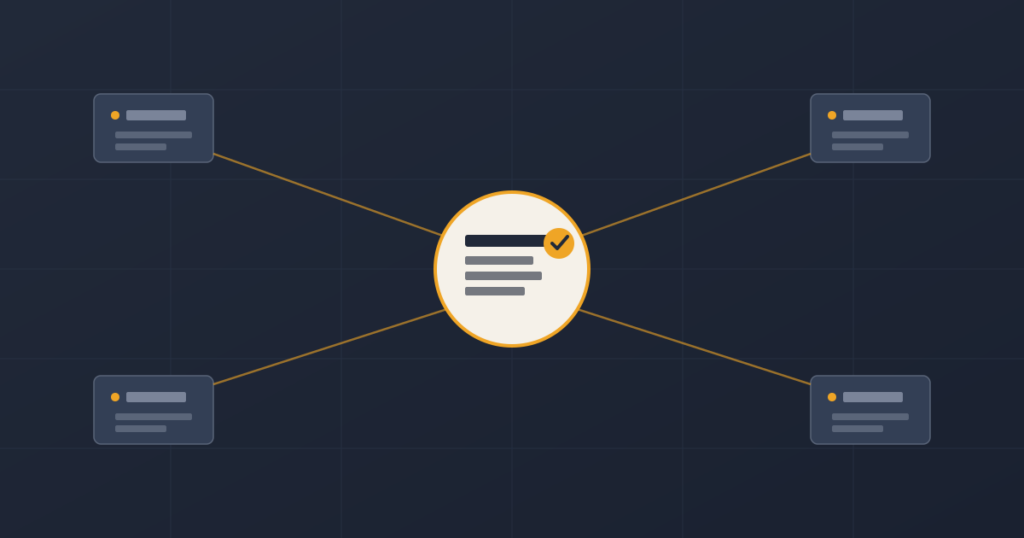
A single branch business can often survive on spreadsheets longer than it should. A business with multiple branches, multiple legal entities, or multiple projects cannot. Consolidating financials across locations by manually combining separate files is slow, error prone, and gets worse with every branch added. What starts as a minor inconvenience with two branches becomes a serious operational drag with five or six.
What multi branch spreadsheet chaos usually looks like:
- Each branch keeps its own sheet, in its own format, updated on its own schedule
- Head office manually copies numbers into a master file once a week or once a month
- Currency, tax, or account naming differences between branches cause consolidation errors
- Nobody has a same day, group level view of cash or profitability
The Audit Nightmare of Spreadsheet Based Books
Auditors do not just want a final number. They want a trail showing how that number was reached, who approved each transaction, and whether the records are internally consistent. Spreadsheets rarely provide any of this by default. There is usually no built in approval trail, no locked audit history, and no way to prove a number was not edited after the fact.
This turns every audit into a reconstruction exercise. Finance teams spend days pulling together supporting documents, cross checking manual entries, and explaining discrepancies that would not exist in a system with proper controls. That is billable audit time, internal staff time, and stress that a properly structured finance system avoids by design.
What Spreadsheet Chaos Actually Costs You
Put together, these are not small, isolated inconveniences. They compound into a real, ongoing cost that most businesses never formally calculate.
| Hidden Cost | Where It Shows Up | Typical Impact |
|---|---|---|
| Manual re-entry and duplication | Staff hours per week across sales, finance, and operations | 10 to 20 hours weekly on data that should sync automatically |
| Delayed month end closing | Decisions made on outdated numbers | 1 to 3 weeks of lag between period end and usable reports |
| Undetected formula errors | Misstated revenue, margins, or tax figures | Corrections discovered months later, sometimes during audit |
| Compliance exposure | FBR and SECP filings reconstructed under time pressure | Higher risk of mismatched or late filings |
| Lost institutional knowledge | One person owns the spreadsheet logic | Finance function stalls when that person is unavailable |
| Slow, difficult audits | Days spent reconstructing an audit trail | Higher audit fees, longer close out periods |
Not sure how much this is actually costing your business? Xenon’s finance team can walk through your current setup and show you where the time and risk is hiding. Get a Detailed Cost Assessment
Manual Bookkeeping vs ERP: A Direct Comparison
| Area | Spreadsheets | Xenon ERP |
|---|---|---|
| Data entry | Manual, repeated across files | Automated ledger posting from sales, purchases, inventory, and payroll |
| Version control | Multiple copies, unclear source of truth | One centralized, real time system of record |
| Financial closing | Days to weeks | Faster closing with automated reconciliation |
| Multi branch consolidation | Manual file merging | Built in multi entity and financial dimension tracking |
| Compliance and tax | Reconstructed manually before filing | Automated withholding tax and audit ready records |
| Reporting | Static, outdated by the time it is reviewed | Real time trial balance, income statement, and balance sheet |
The Real Signal You Are Ready to Move to ERP
There is no single revenue number or employee count that means it is time to move off spreadsheets. The real signal is behavioral. If your team spends more time defending the numbers than using them, if closing the books feels like an event rather than a routine, and if every audit or funding conversation triggers a scramble, the business has already outgrown its finance tools. The spreadsheet is not saving money at that point, it is just deferring the cost of switching.
What Xenon’s Finance & Accounting Module Actually Replaces
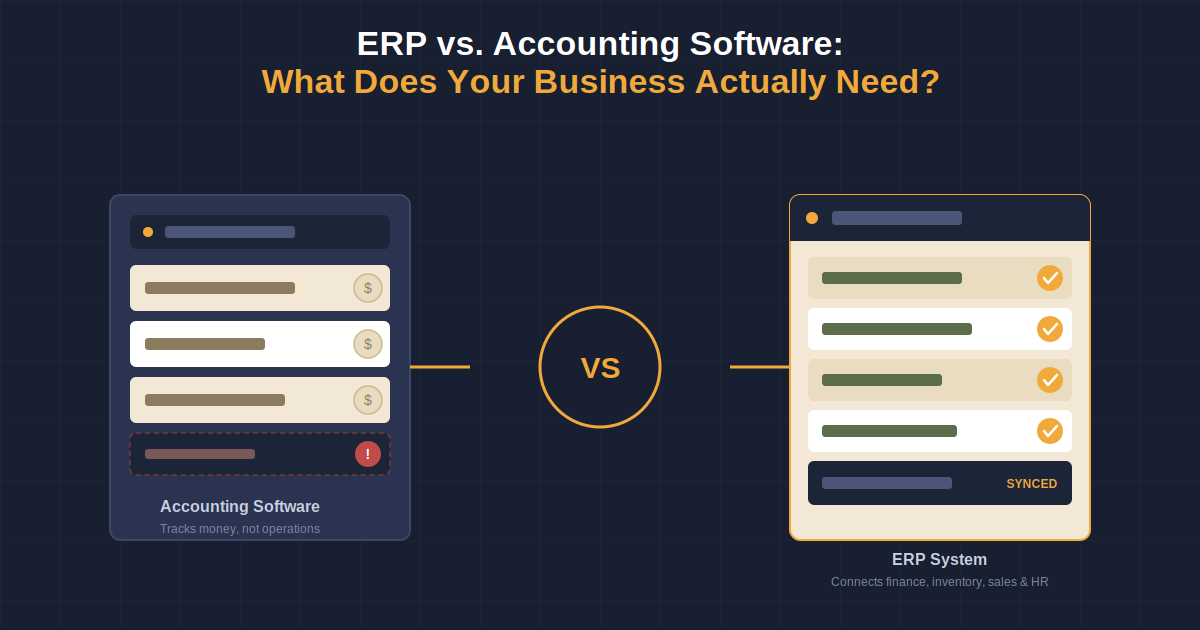
Xenon ERP centralizes accounting into a single financial backbone instead of a collection of disconnected files. Every transaction from sales, purchases, inventory, and payroll posts automatically into the correct ledger, so the numbers stay consistent without anyone manually reconciling them.
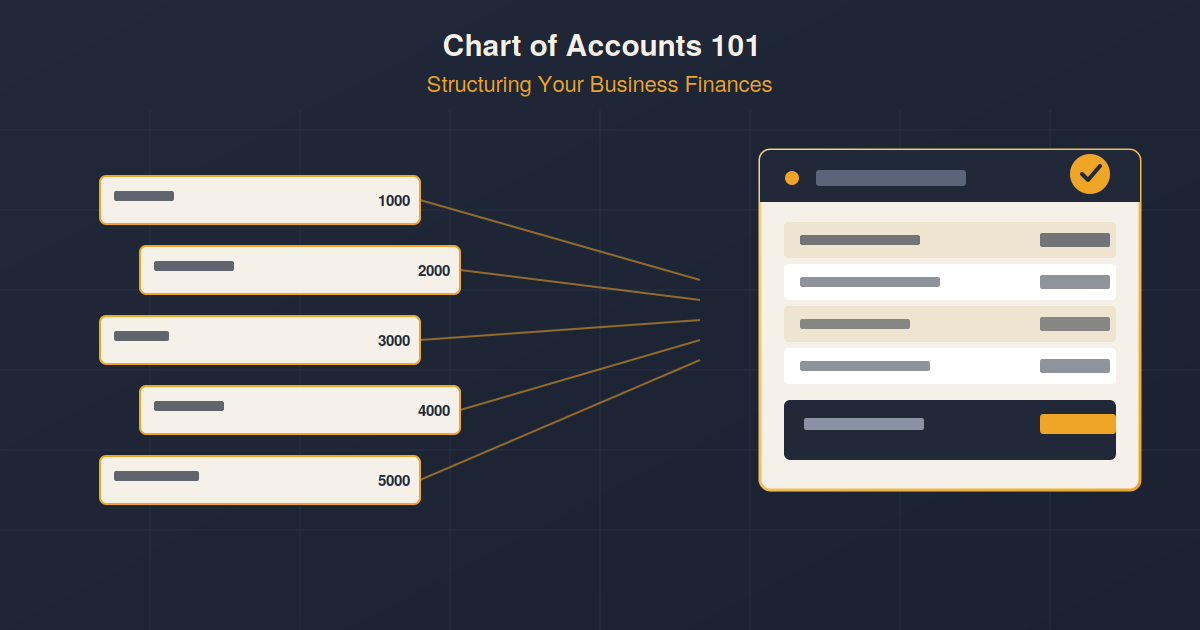
- Chart of Accounts — A flexible account structure built around how your business actually operates, not a generic template.
- Financial Dimensions — Track finances by department, project, branch, or cost center without separate spreadsheets for each.
- Legal Entities — Manage multiple companies or branches from one system instead of merging files by hand.
- Automated GL Posting — Sales, purchases, inventory, and payroll post directly to the general ledger in real time.
- Withholding Tax Automation — Tax deductions calculate and record automatically, reducing filing risk.
- Instant Trial Balance — Trial balance, income statement, and balance sheet generate on demand, not after a week of prep.
See the full breakdown on the Finance & Accounting module page.
Questions to Ask Before You Make the Switch
Moving off spreadsheets is a real decision, not a small one, so it is worth going in with clear questions rather than assumptions.
- How much staff time is currently going into manual data entry and reconciliation each month
- How many versions of financial truth exist across departments right now
- What would it cost the business if a key spreadsheet owner left tomorrow
- How exposed is the business during an FBR or SECP audit today
- Does the current setup give a same day view of cash across all branches
If you want a longer checklist before any ERP conversation, our guide on 9 Questions to Ask Before Buying ERP Software in Pakistan covers the broader evaluation process.
This process credibility check is exactly what Xenon’s onboarding starts with, a requirement review that maps your actual finance workflows before any system configuration begins.
What Migration From Spreadsheets to ERP Actually Involves
Moving off spreadsheets does not mean throwing away your financial history. A structured migration starts with reviewing your existing chart of accounts and workflows, mapping your historical data for import, configuring the system to match how your business actually runs, training your team, and then going live with support in place. Businesses that plan for this properly usually see a smoother transition than they expected, because the ERP is built to absorb the structure spreadsheets never had in the first place.
If you are curious what this looks like from a cost and structure perspective, our breakdown on ERP Software Cost in Pakistan lays out real pricing ranges for Pakistani SMEs.
Frequently Asked Questions
At what point should a business stop using Excel for finance?
There is no fixed revenue threshold. The real signal is when closing the books takes longer than a few days, when more than one version of the numbers exists, or when the business operates across more than one branch or entity that has to be consolidated manually.
Is ERP software only for large companies?
No. Xenon ERP is built to scale for SMEs, offering the same financial control and automation that larger companies use, without requiring a large IT team to run it.
How much time do businesses actually save by moving off spreadsheets?
Most finance teams recover significant hours each week that were previously spent on manual entry and reconciliation, time that shifts toward analysis and decision making instead.
Can Xenon ERP handle FBR sales tax and withholding tax requirements?
Yes. Xenon ERP supports automated tax calculations, withholding tax deductions, and audit ready records built to meet Pakistani regulatory requirements.
What happens to our historical spreadsheet data during migration?
Historical data is mapped and imported into the new system as part of the onboarding process, so financial history is preserved rather than lost in the switch.
Can Xenon ERP manage finances across multiple branches or companies? Yes. The Finance and Accounting module supports multiple legal entities and branches from a single system, along with financial dimensions to track performance by department, project, or cost center.
How long does it take to move from spreadsheets to an ERP system?
Timelines vary based on business complexity, but the process generally follows requirement review, data mapping, system setup, training, and go live, with support continuing after launch.
Do we need to train our whole finance team to use the new system?
Basic training is part of onboarding, and Xenon is designed to be easy to navigate without extensive technical background, so most teams adapt quickly.
Will an ERP system actually reduce our audit preparation time?
Yes. Because transactions post automatically with a built in trail, audit preparation shifts from reconstructing records to simply reviewing them, which significantly reduces prep time.
Is switching from Excel to ERP expensive for a small or mid sized business?
Costs vary by business size and modules needed. Our detailed breakdown in ERP Software Cost in Pakistan gives real ranges so you can budget before committing.
Final Thoughts
Spreadsheets are not free. They just charge you in a currency that does not show up on an invoice, staff hours, delayed decisions, compliance exposure, and the quiet risk of an error nobody catches until it matters. For a business with one person and one ledger, that price is low enough to ignore. For a growing business with multiple branches, real compliance obligations, and decisions riding on accurate numbers, the price has already gotten too high, most owners just have not added it up yet.
The businesses that switch early do it not because Excel broke, but because they noticed the real cost before it forced their hand. If any of the signs in this article sound familiar, that is worth a closer look.
Related Reading:
- What Pakistani Businesses Actually Save When They Switch from Excel to Xenon: 2026 Breakdown
- Chart of Accounts 101: How to Structure Your Business Finances in Xenon ERP
- ERP Software Cost in Pakistan: Complete 2026 Breakdown for SMEs
Ready to see what your finance data would look like without the spreadsheets?