The numbers on your production report and the numbers on your factory floor rarely match. Here is how to tell if manual tracking is quietly draining your margins, and what actually fixes it.
A production supervisor at a Sialkot sports goods factory spends the first hour of every shift walking the floor with a clipboard, checking what got made yesterday against what the register says should have been made. By the time the numbers reach finance, they are three days old and nobody fully trusts them.
This is normal in a lot of Pakistani factories. Production planning happens on WhatsApp groups, material consumption gets logged after the fact, and actual cost versus planned cost is something finance figures out at month end, if at all. It works, sort of, until it does not.
The problem is not that manual tracking is impossible. It is that it hides losses instead of catching them. Below are 7 signs that manual production tracking is costing you more than you think, and what an integrated manufacturing system actually changes.
Why Manual Production Tracking Still Costs Pakistani Manufacturers So Much
Textile mills, FMCG plants, and engineering workshops across Karachi, Lahore, Faisalabad, and Sialkot run on a mix of spreadsheets, paper registers, and verbal handoffs between shifts. It is not a lack of effort. Production teams work hard to keep numbers accurate. The issue is that manual systems cannot keep pace with a factory floor that changes by the hour.
We have seen this pattern across textile, FMCG, engineering, and pharmaceutical manufacturers using Xenon’s manufacturing module. The businesses that switch almost always describe the same starting point, production numbers that looked fine on paper but never quite matched what finance was seeing.
Sign 1: You Only Find Out About Delays After They Happen
01 Production status lives in someone’s head, not a system
If knowing where a production order stands means calling the shop floor supervisor, you are managing production reactively. By the time a delay reaches management, the delivery date is already at risk. Real time production order tracking flags a bottleneck the same day it starts, not the day a client calls asking where their order is.
Sign 2: Your Bill of Materials Lives in Someone’s Head or a Spreadsheet
02 No single, accurate source for what a product actually requires
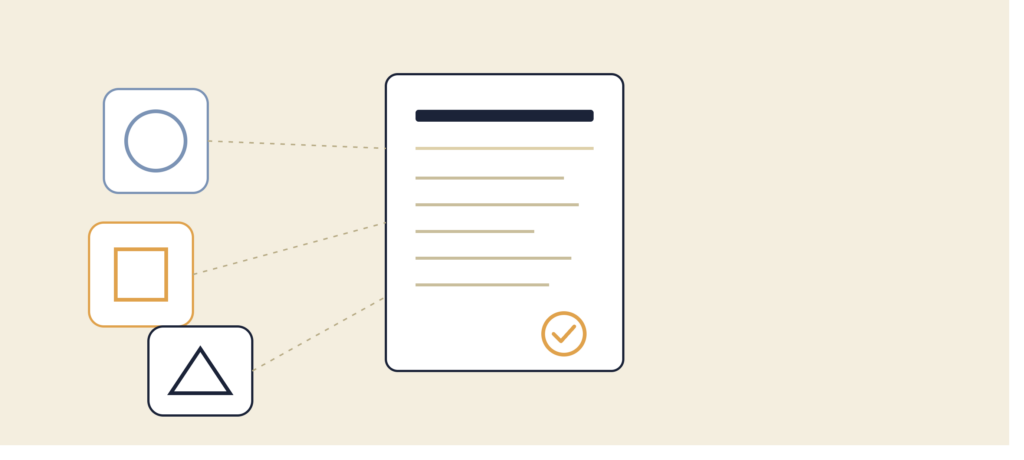
Without a properly maintained Bill of Materials, or BOM, every production run depends on someone remembering the right mix of materials and quantities. Small variations creep in, and nobody notices until raw material runs out mid batch or finished goods cost more than expected.
Sign 3: Nobody Can Tell You Actual Cost vs Planned Cost
03 Costing happens after the fact, if at all
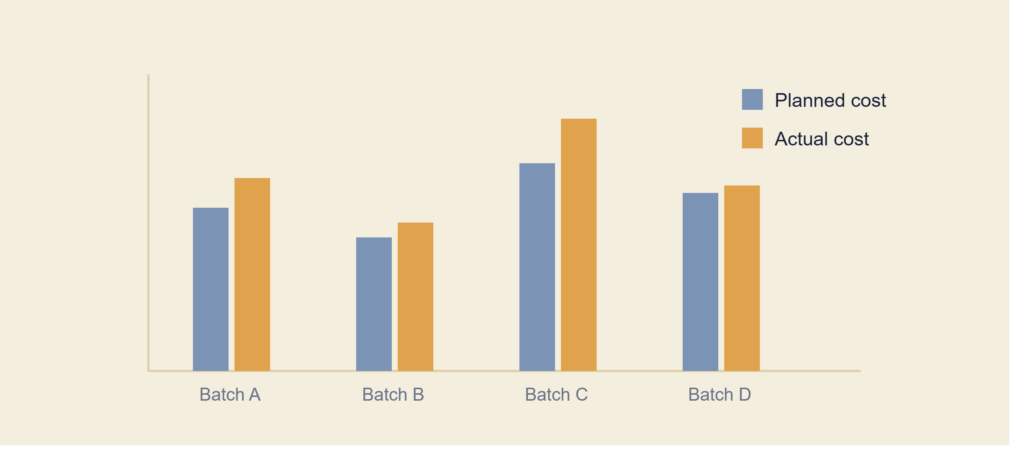
Planned cost gets set once at the start of the season and rarely revisited. Actual cost, including machine time, labor, and material overruns, only becomes clear when finance closes the books weeks later. By then, the pricing decision that lost money has already been made on the next order too.
Sign 4: Scrap and Wastage Are Written Off as “Normal”
04 Losses get absorbed instead of investigated
Every factory has some scrap and wastage. The problem is when it is treated as an unavoidable cost of doing business instead of a number worth tracking. Without a system that logs scrap against specific production orders, machines, or shifts, you cannot tell if wastage is stable or quietly climbing.
Sign 5: Inventory and Production Numbers Never Match
05 Stock counts and production reports tell different stories
If your warehouse team and your production team keep separate records, discrepancies are inevitable. Raw material gets issued informally, finished goods get moved before they are logged, and a physical stock count regularly surprises everyone in the room.
Sign 6: Quality Issues Get Caught at the End, Not During Production

06 Inspection happens too late to prevent the cost
Without in process quality checks tied to each production stage, defects often surface only at final inspection, after materials, labor, and machine time have already been spent. Catching a quality issue mid process is far cheaper than catching it after the batch is finished.
Sign 7: Your Finance Team Reconciles Manufacturing Numbers by Hand
07 Accounting entries are a manual translation exercise
When production data and the general ledger are not connected, someone in finance is manually re-entering material issues, WIP values, and finished goods postings every month. That is hours of work that adds delay and room for error into numbers that leadership relies on to make decisions.
Quick gut check
If you cannot answer “what is our actual production cost on last week’s batch, versus what we planned” without calling three different people, signs 3 and 7 above are already costing you money.
What These Signs Are Really Costing You
None of these problems show up as a single dramatic loss. They show up as margin that quietly erodes over a year, pricing decisions based on stale cost data, and a finance team that spends its time reconciling numbers instead of analyzing them. For a mid sized manufacturer, that gap is often the difference between a profitable season and a break even one.
Not sure how much manual tracking is costing your factory?
Xenon’s team can walk through your current production process and map out where the gaps are.
Get a Detailed Cost Assessment
How ERP Fixes Each of These Problems
| Manual approach | What an integrated manufacturing module changes |
|---|---|
| Production status tracked by phone calls | Real time production order and work in progress tracking visible to everyone who needs it |
| BOM in a spreadsheet, updated inconsistently | A single, controlled Bill of Materials tied directly to every production order |
| Cost known only after month end close | Costing and variance analysis comparing actual versus planned cost in real time |
| Scrap absorbed as a fixed cost | Scrap and wastage logged against specific orders, machines, and shifts |
| Inventory and production reconciled manually | Automatic material issue and finished goods receipt, synced with inventory |
| Quality checked only at final inspection | In process and final quality control built into the production workflow |
| Manufacturing entries re-entered into accounting by hand | Automatic GL postings from production transactions |
What to Look for in a Manufacturing ERP Module
Not every ERP module built for manufacturing is built the same way. Before committing, check that the system covers production planning and scheduling, a proper BOM structure, real time material consumption tracking, work in progress visibility, machine and labor tracking, costing and variance analysis, quality control, and direct integration with inventory and finance. If any one of these is missing, you are likely to end up back where you started, reconciling numbers by hand somewhere in the process.
Process credibility
Xenon’s manufacturing module was built around exactly this list, production planning, BOM, material consumption, WIP, production orders, machine and labor tracking, costing and variance analysis, quality control, inventory integration, scrap and wastage control, and GL integration, so nothing falls back to a spreadsheet.
Getting Started: What Switching to Xenon Looks Like
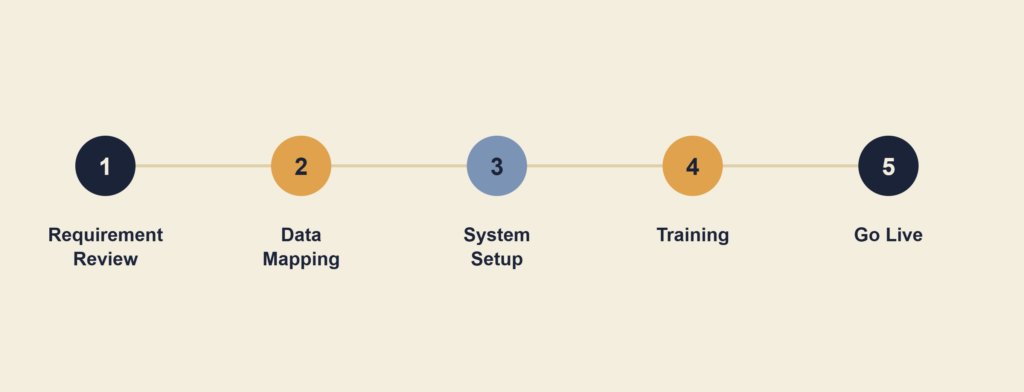
Implementation follows a clear path. It starts with a requirement review to understand how your production actually works, then data mapping to prepare and align your existing records, followed by system setup to configure the manufacturing module around your workflows. Training comes next, so your team is comfortable before go live, and support continues after launch rather than stopping at handover.
How Xenon’s Manufacturing Module Solves This
Xenon ERP’s manufacturing solution centralizes production planning, material consumption, and costing with real time visibility across production, inventory, and finance. It is built for the industries where this pain shows up most, textile and apparel, FMCG and consumer goods, engineering and industrial manufacturing, and pharmaceuticals and chemicals.
Production planning and BOM Schedule manufacturing orders against an accurate, controlled Bill of Materials.
Real time WIP and costing See work in progress and actual versus planned cost as production happens, not after.
Scrap and quality control Track wastage against specific orders and catch quality issues mid process.
Full financial integration Automatic material issue, finished goods posting, and GL entries, no manual reconciliation.
Spintex struggled with manual production tracking, limited visibility across work centres, and inaccurate reporting. After implementing Xenon’s manufacturing module, production tracking became centralized, work centre updates synced automatically, and reporting accuracy improved across the board. Waqas Nasir, Spintex
Frequently Asked Questions
How does ERP help with manual production tracking?
An ERP manufacturing module centralizes production planning, material consumption, and shop floor data in one system, replacing spreadsheets and verbal updates with real time visibility that production, inventory, and finance teams can all see.
What is a Bill of Materials (BOM) and why does it matter?
A Bill of Materials defines exactly which materials and quantities go into a finished product. A properly maintained BOM keeps production consistent and makes costing accurate, since every material issue is tied back to a controlled recipe rather than guesswork.
Can ERP track machine and labor costs in manufacturing?
Yes. A manufacturing ERP module tracks machine time and labor against specific production orders, which feeds directly into costing and variance analysis so actual cost can be compared to planned cost.
How does ERP reduce scrap and wastage?
By logging scrap and wastage against specific production orders, machines, or shifts, an ERP system makes losses visible and traceable instead of being absorbed as an unexplained cost, which makes it possible to actually address the cause.
Is manufacturing ERP integrated with inventory and finance?
In a properly built system, yes. Material issues, work in progress, and finished goods postings should update inventory automatically, and manufacturing transactions should post directly to the general ledger without manual re-entry.
Can management monitor production performance in real time?
Yes, with real time production reports, work in progress tracking, and cost analysis dashboards, management can see how a batch is performing while it is still on the floor rather than waiting for a month end report.
How long does it take to implement a manufacturing ERP module?
Timelines vary by factory complexity, but implementation typically moves through requirement review, data mapping, system setup, training, and go live. Smaller operations with simpler workflows generally move faster than multi site manufacturers.
Is manufacturing ERP suitable for small factories, not just large ones?
Yes. Manual tracking problems, delayed visibility, inaccurate costing, unexplained wastage, tend to hit small and mid sized factories just as hard as large ones, often harder, since there is less slack in the budget to absorb the losses.
What industries benefit most from manufacturing ERP?
Textile and apparel, FMCG and consumer goods, engineering and industrial manufacturing, and pharmaceuticals and chemicals all rely heavily on accurate BOM, costing, and quality control, which makes them strong fits for a dedicated manufacturing module.
How much does a manufacturing ERP module cost in Pakistan?
Cost depends on the size of your operation, the number of production lines, and how many users need access. A detailed cost assessment based on your specific setup is the most reliable way to get an accurate number.
Final Thoughts
Manual production tracking does not fail loudly. It fails quietly, one unreconciled number at a time, until a season ends and nobody can fully explain where the margin went. The fix is not more spreadsheets or stricter clipboard discipline. It is a system that captures production, material, and cost data as it happens, not after.
For more on this, read our guides on
Why Production Planning Fails Without Integrated Systems,
ERP Software Cost in Pakistan: Complete 2026 Breakdown for SMEs, and 9 Questions to Ask Before Buying ERP Software in Pakistan.
Ready to see what your factory floor looks like with real time visibility?
Book a free demo and see how Xenon’s manufacturing module fits your production process.
Xenon ERP. Manufacturing, finance, and operations software for Pakistani businesses.